More SSEBE news
A new campus blueprint
An ASU professor integrates smart devices to upscale data collection for a new frontier of computing.

ASU’s engineering power couple
Transportation and traffic engineering duo earn awards and credit the ASU community for their success.
Curbing concrete’s carbon emissions with innovations in cement manufacturing
National Science Foundation supports ASU research to reduce harmful environmental impacts.
Learn about our programs
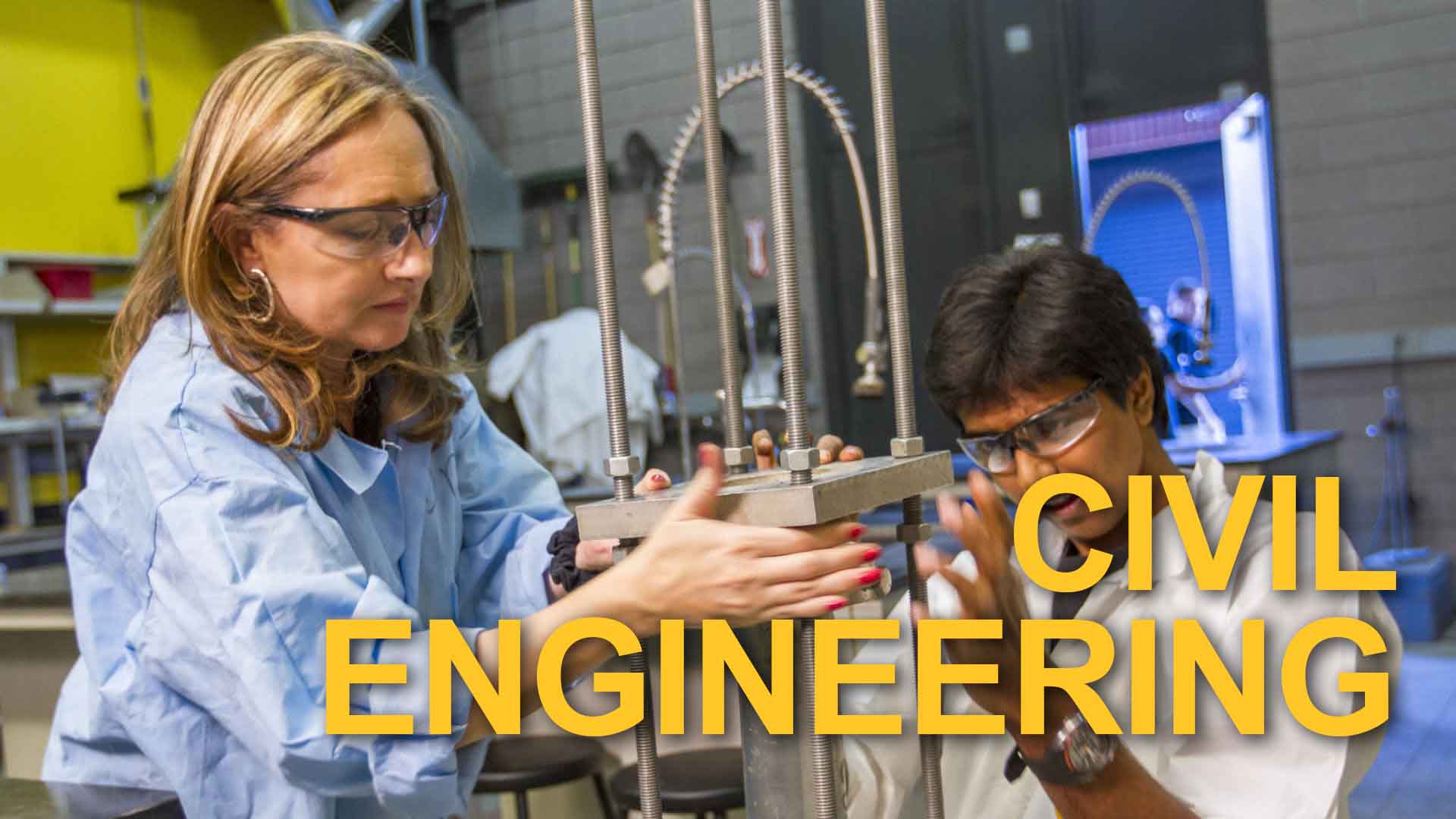
Civil engineering
Inspiring the next generation, ASU’s civil engineering curriculum sharpens your technical problem solving skills and frees your imagination to revolutionize current design principles into cutting-edge “green” engineering solutions.
Construction management and technology
ASU’s construction management curriculum provides the core principles of design, cost estimation, and planning. You will be prepared to direct the entire building process or guide the maintenance, operation, renovation, or decommissioning of existing facilities.
Construction engineering
One of the leading programs nationwide, ASU’s construction engineering curriculum combines the design principles of civil engineering with the business knowledge of construction management.
Environmental engineering
The environmental engineering BSE degree program will focus on the engineered processes and systems that preserve, protect and restore the natural environment for benefits to human health and ecosystem services.
What is “Sustainable Engineering and the Built Environment”?
Sustainable engineering is a revolutionary approach to engineering that
- Focuses on the long-lasting improvement of the human condition;
- Recognizes the connections between infrastructure and the human and natural systems; and
- Designs and constructs complex systems by considering environmental impacts, life-cycle assessment, and risk and uncertainty, along with technical and economic effectiveness.
The built environment includes society’s physical infrastructure and integrated systems that create the conditions for sustained health, prosperity and social well-being.
Involvement with the built environment generally includes the initiation of projects or programs through planning, design, construction, operations and decommissioning; the so-called “life-cycle” of the endeavor.